The Instagram Algorithm 2026 Doesn't Care About Your Likes Anymore
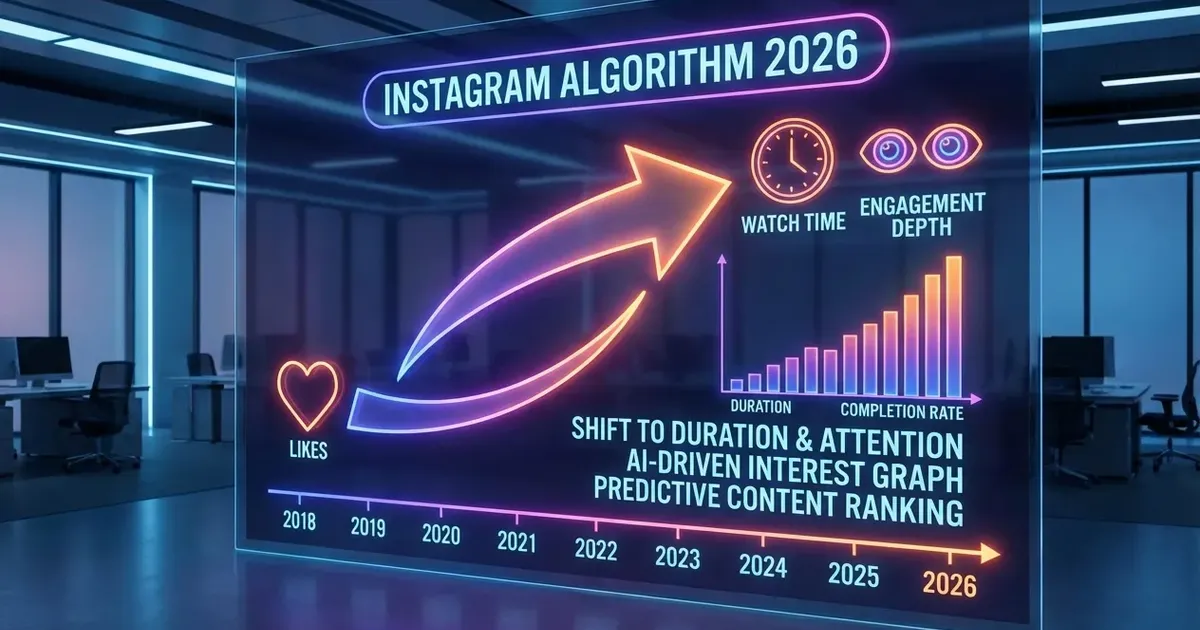
The Instagram algorithm 2026 ranks content by watch time, saves, shares, and DMs -- not likes. Instagram now operates four separate ranking systems for Feed, Reels, Stories, and Explore, and every one of them prioritizes how long users stay engaged over how many double-taps a post collects. If your growth strategy still revolves around like counts, you are optimizing for a signal that carries less weight with each quarterly update.
With over 2 billion monthly active users, Instagram's algorithm must decide which fraction of content each person actually sees. That filtering has shifted decisively toward attention-based ranking signals. AI Overviews already trigger on the query "how does the Instagram algorithm work in 2026," pulling from eight cited sources -- and the consensus across all of them is the same: minutes watched now outrank likes received.
In our experience tracking delivery patterns across millions of engagements, accounts that adapted to attention-based signals early saw measurable reach gains within weeks. Those still chasing likes experienced a steady decline in organic distribution throughout late 2025 and into 2026.
Key Takeaway: The Instagram algorithm 2026 treats watch time as the #1 ranking signal. Saves, shares, and DMs serve as secondary amplifiers. Likes still factor in, but they carry significantly less weight than they did in 2024-2025.
 Instagram Algorithm 2026 -- how ranking signals have shifted from likes to watch time
How Does the Instagram Algorithm Work in 2026?
There is no single "Instagram algorithm." Instagram confirmed on creators.instagram.com that it runs separate ranking systems for Feed, Reels, Stories, and Explore -- each with its own signal hierarchy. Understanding how the Instagram algorithm works across these four surfaces is the foundation of any effective 2026 strategy.
Important distinction: A post that performs well in Feed may never surface in Explore, and a Reel that goes viral in recommendations may barely appear in your followers' Feed. Each system evaluates content independently.
Feed Algorithm
The Instagram feed algorithm prioritizes content from accounts you interact with most. It weighs relationship signals -- how often you comment on someone's posts, whether you DM each other, and how frequently you view their Stories. In 2026, the feed algorithm also factors in time spent viewing a post. A carousel that holds attention for 15 seconds ranks higher than a single image scrolled past in two. Feed ranking follows a clear hierarchy: relationship history first, predicted interaction score second, recency third.
Reels Algorithm
The Reels algorithm operates as a discovery engine, surfacing content from accounts you do not follow. It weights watch time and replay rate heavily. A Reel that viewers watch to completion -- or rewatch -- gets pushed to exponentially larger audiences. According to Instagram's 2025 creator documentation, Reels ranking prioritizes entertainment value measured through viewing behavior rather than explicit engagement like comments. Trending audio and editing patterns provide an initial distribution boost.
Explore Algorithm
The Explore algorithm recommends content based on past interaction patterns, not your follower graph. It clusters users by interest categories and surfaces posts similar users engaged with. In 2026, Explore leans heavily on saves as a top signal -- the logic being that saved content represents genuine interest strong enough to revisit. Post freshness and visual quality also factor into Explore placement.
Stories Algorithm
The Stories algorithm determines which accounts appear first in the Stories tray -- and which get buried at the end. It favors accounts with the highest DM reply rates, poll and sticker tap frequency, and watch-through rates. Relationship strength is the dominant factor: if you regularly reply to someone's Stories via DM or react with emojis, their Stories appear at the front of your tray. This makes Stories a relationship-maintenance surface rather than a discovery tool.
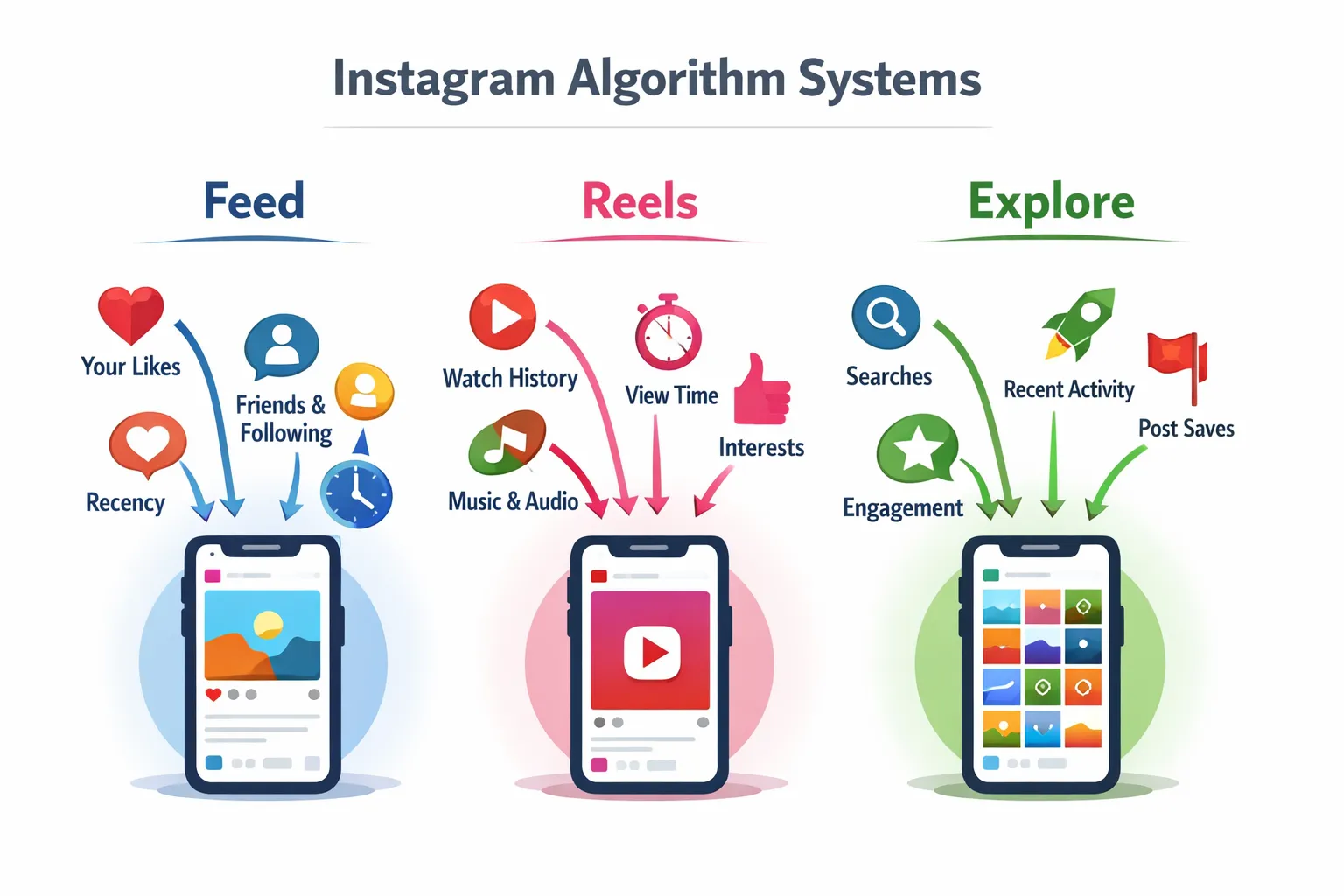 How the Instagram algorithm works in 2026 -- Feed, Reels, Explore, and Stories systems
What Ranking Signals Does the Instagram Algorithm Prioritize?
Understanding the Instagram algorithm 2026 ranking signals is essential for any content strategy. Watch time now outweighs likes as the number one signal -- confirmed across Instagram's own 2025 trends post and creator documentation. But watch time sits atop a multi-layered signal stack, and each signal carries different weight depending on the surface.
Here is how the Instagram ranking signals break down across all four surfaces:
| Signal | Weight | Applies To |
|---|---|---|
| Watch time | High | Feed, Reels, Explore |
| Saves | High | Feed, Reels, Explore |
| Shares (Send to DM) | High | Reels, Feed |
| DM conversations | Medium | Feed, Stories |
| Comments | Medium | Feed, Reels, Explore |
| Likes | Medium | Feed, Reels, Explore, Stories |
| Story replies/reactions | Medium | Stories |
| Profile visits | Low | Feed, Explore |
| Follows from post | Low | Reels, Explore |
The pattern is clear: passive engagement signals like likes have dropped to medium weight, while active signals -- saves, shares, and DMs -- sit alongside watch time in the top tier.
What makes this system powerful is signal compounding. A Reel that earns high watch time and a strong save rate enters a reinforcing loop: the algorithm shows it to more people, which generates more watch time and saves, which triggers further distribution. Content that collects likes without sustained viewing time hits a distribution ceiling. The algorithm treats a like without watch time as a weak signal -- the user acknowledged the post but did not find it valuable enough to consume.
- Watch time is the #1 signal across Feed, Reels, and Explore
- Saves indicate high-value content the user wants to revisit
- Shares to DMs signal content worth recommending to others
- DM conversations strengthen relationship signals for Feed and Stories ranking
- Comments still matter, especially early comments within the first hour
- Likes remain relevant but no longer dominant
- Profile visits and new follows act as secondary amplifiers
Pro Tip: Track your saves-to-reach ratio in Instagram Insights. A save rate above 2% correlates strongly with Explore page placement and signals to the algorithm that your content delivers lasting value.
 Instagram algorithm ranking signals table -- watch time, saves, shares, DMs, comments, likes
Why Did Instagram Shift From Likes to Watch Time?
Instagram's 2026 trends post states it directly: "minutes watched will matter more than likes." This is not a subtle tweak -- it represents a fundamental change in how the Instagram algorithm 2026 defines valuable content.
The reasoning comes down to signal quality. Likes are cheap: a double-tap takes half a second and requires almost no commitment. Watch time is a scarce resource. When a user spends 45 seconds on your Reel or swipes through all ten slides of your carousel, they are giving you something they cannot get back -- attention. The Instagram algorithm now treats that attention as the strongest indicator of content quality.
This shift mirrors what TikTok proved over the past three years. TikTok's entire recommendation engine is built on completion rates and watch time, and it has become the most engaging short-form video platform globally. Meta studied those results and adapted. The Instagram algorithm changes in 2026 reflect Instagram's alignment with the same attention-economy model: rewarding depth-of-engagement signals over surface-level interactions.
Consider Instagram's internal logic: a post that 1,000 people watch for 30 seconds each delivers more total attention than a post that 5,000 people like but scroll past in two seconds. The first post earns 500 minutes of viewer time. The second earns virtually none. For content creators, the implication is significant -- a smaller audience that watches your content is more valuable to the algorithm than a larger audience that ignores it.
Strategy shift: Stop measuring success by likes alone. Track average watch time per Reel, carousel completion rate, and saves-to-impressions ratio. These metrics now predict algorithmic distribution far more accurately than like counts.
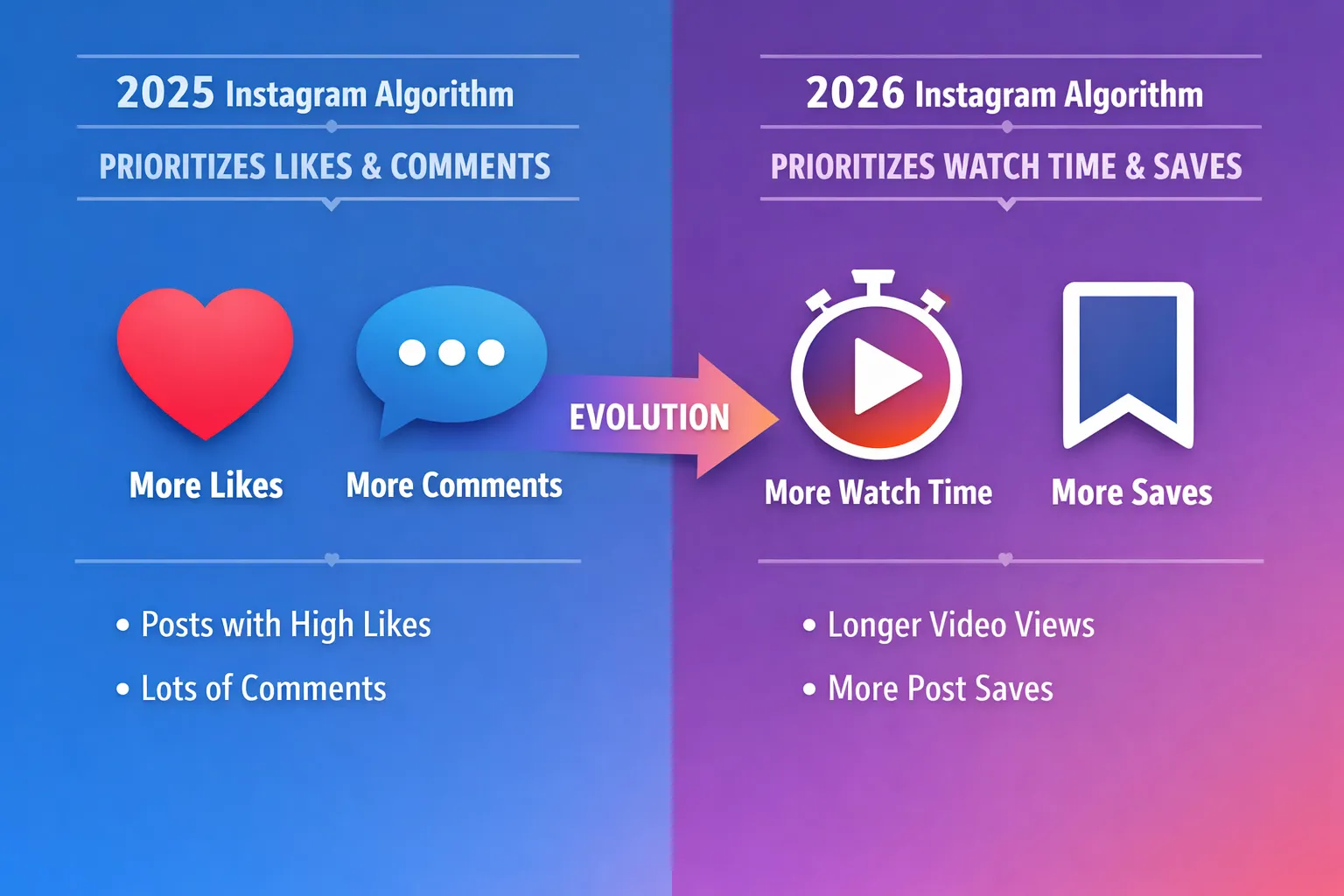 Why Instagram shifted from likes to watch time -- the attention economy model
What Changed in the January 2026 Reels Personalization Update?
In January 2026, Instagram rolled out a Reels personalization update that fundamentally changed how the Instagram reels algorithm 2026 distributes content. Instead of broad topic-based recommendations, the algorithm now builds a detailed profile of each user's viewing habits and tailors the Reels feed accordingly. Here are the four key Instagram algorithm changes 2026 introduced:
- Granular interest mapping. The algorithm tracks not just broad categories (fitness, cooking, comedy) but specific sub-topics, creator styles, and editing formats you engage with most. A user who watches recipe Reels but skips baking content will see more savory cooking and fewer dessert tutorials.
- Watch-pattern weighting. Content you watch to completion gets amplified in future recommendations. Content you skip within the first two seconds gets deprioritized -- along with similar content from other creators in that niche.
- Session-based adaptation. The Reels feed now adjusts within a single session. Watch three fitness Reels in a row, and the algorithm starts surfacing more workout content in real time, adapting faster than ever before.
- Reduced discovery radius for low-retention content. Reels with low average watch times get cut from recommendation pools faster -- often within the first 200 impressions. A Reel with a 70% completion rate dramatically outperforms one with a 30% rate, even if the lower-performing Reel has more total views.
Privacy note: Users can influence recommendations through the "Not Interested" feature and topic preferences. However, as Engadget reported, users "can't ask for fewer ads" within the new personalization system. The update optimizes content recommendations but keeps ad targeting unchanged.
The January 2026 update also expanded Trial Reels -- a feature that lets creators test content with non-followers before committing to a full post. Trial Reels are shown to a small audience outside your follower base, and their performance data (completion rate, saves, shares) helps you gauge whether the content is worth publishing broadly. For content creators testing new formats or topics, Trial Reels reduce the risk of a poorly performing post dragging down your account's overall engagement metrics.
Creator tip: Front-load your hook. The January 2026 update makes the first two seconds of a Reel more critical than ever. Open with a surprising visual, a bold statement, or a question that demands an answer -- then deliver on the promise before the viewer swipes away.
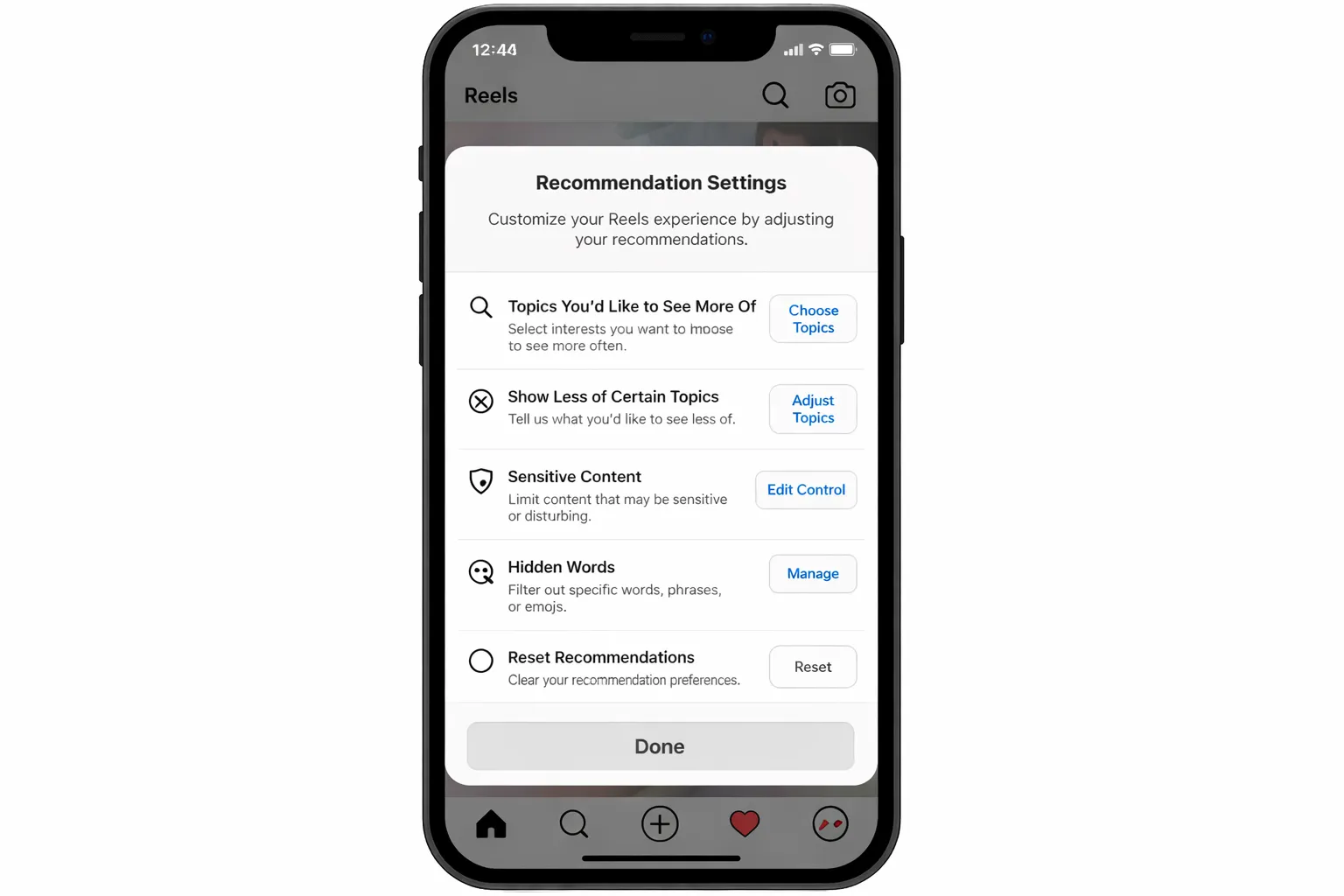 January 2026 Reels personalization update -- key changes and Trial Reels feature
How Do You Beat the Instagram Algorithm in 2026?
Instagram's own Reel comparing 2025 vs. 2026 advice states: "stop focusing only on quality over quantity -- post as often as you can." This reversal of years of "less is more" guidance signals a major strategy shift in the Instagram algorithm 2026 era. Here is what the algorithm actually rewards, broken down by the signals that matter most.
Optimize for Watch Time
Watch time is the dominant signal. Every piece of content you publish should be engineered to hold attention from the first frame:
- Open Reels with a hook in the first 1.5 seconds -- a question, a bold claim, or an unexpected visual
- Use multi-slide carousel posts with 7-10 slides to extend time-on-content
- Add text overlays to Reels that encourage viewers to pause and read
- Keep Reels between 15-45 seconds -- long enough for substance, short enough for completions
- The completion rate directly determines whether the algorithm pushes your content to broader audiences
Encourage Saves and Shares
Saves and shares are the highest-value engagement signals after watch time. Content that gets saved is content the algorithm considers reference-worthy:
- Create educational content with step-by-step value -- checklists, tutorials, "how-to" frameworks
- End carousels with a summary slide that triggers the "save this for later" impulse
- Post content that provokes a "I need to send this to someone" reaction -- that DM share is one of the strongest signals available
How Often Should You Post on Instagram in 2026?
The quality vs. quantity debate has shifted. Instagram now rewards posting frequency alongside quality. In our experience working with creators, consistent posting frequency correlates more strongly with sustained reach than individual post quality.
| Account Size | Recommended Frequency | Format Mix |
|---|---|---|
| Under 10K followers | 5-7 Reels/week + 3 Feed posts | 70% Reels, 30% carousels |
| 10K-100K followers | 4-5 Reels/week + 2-3 Feed posts | 60% Reels, 40% mixed |
| 100K+ followers | 3-5 Reels/week + 2 Feed posts | Flexible based on niche |
Consistency signals reliability to the algorithm. Accounts that post regularly get tested with new audiences more frequently than accounts that post sporadically -- regardless of individual post quality.
Use Hashtags and SEO Keywords in Captions
Hashtags are not dead, but their role has changed. Instagram now uses hashtags primarily as topic classifiers rather than discovery tools. The algorithm reads hashtags to understand what your content is about and match it with interested users -- but stuffing 30 hashtags no longer amplifies reach.
The current best practice: use 3-5 highly relevant, niche-specific hashtags that accurately describe your content topic. Avoid generic tags like #instagood or #photooftheday. Instagram's newer "Add Topics" feature offers an alternative way to categorize content directly, giving the algorithm even clearer signals about your post's subject matter. Include SEO keywords in captions naturally -- the algorithm parses caption text for topical relevance.
Use Carousel Posts for Extended Watch Time
Carousel posts are an underrated weapon in the Instagram algorithm 2026 playbook. Each swipe counts as extended engagement, and the algorithm measures how many slides users view. The sweet spot is 7-10 slides with a clear narrative arc -- enough depth to deliver value, not so many that users abandon before the end.
Structure carousels with a hook on slide one, core value in slides 2-8, and a save-triggering summary on the final slide. Carousel posts consistently earn higher save rates than single images, and that save signal compounds with the extended watch time to push content into Explore.
Quality vs. quantity in 2026: Instagram's guidance is clear -- do both. Post frequently, but do not sacrifice content value. A daily Reel that gets skipped in two seconds hurts your account more than posting nothing. Frequency matters, but retention matters more.
Here is a quick-reference checklist for beating the Instagram algorithm:
- Hook viewers in the first 1.5 seconds of every Reel
- Create carousel posts with 7-10 slides for extended watch time
- Design content worth saving -- tutorials, checklists, reference guides
- Post at least 4-5 Reels per week for consistent algorithmic testing
- Use 3-5 niche-relevant hashtags as topic classifiers
- Respond to comments within the first hour to boost engagement signals
- Encourage DM shares by creating "send this to a friend" content
- Track saves-to-reach ratio as your primary performance metric
- Cross-promote Reels to Stories for additional view signals
- Test posting times and double down on windows with highest completion rates
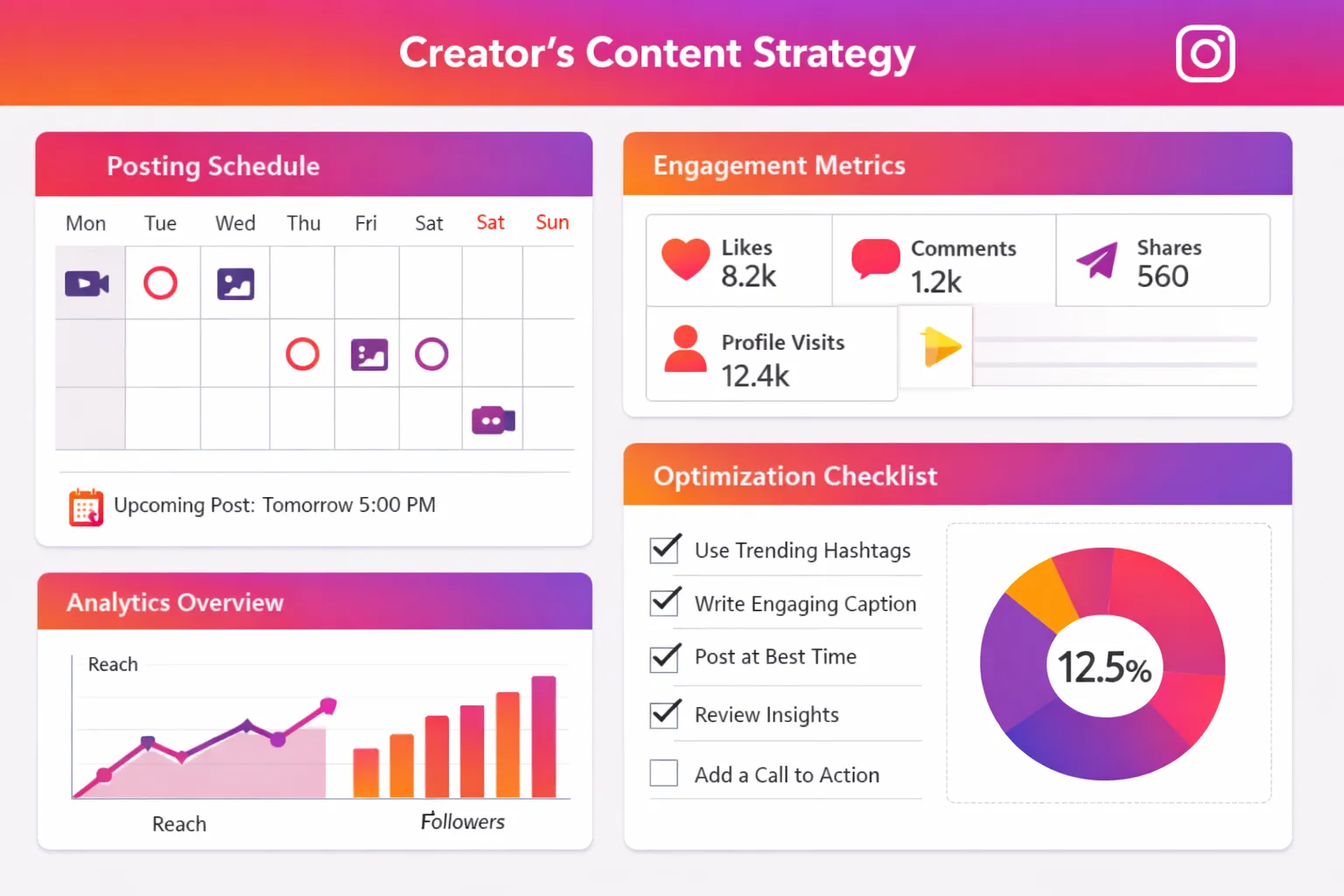 How to beat the Instagram algorithm in 2026 -- posting frequency, hooks, and saves strategy
What Are the 5-3-1 and 4-1-1 Posting Rules on Instagram?
Beyond posting frequency, how you structure your content mix matters for the Instagram algorithm 2026. Two frameworks -- the 5-3-1 rule and the 4-1-1 rule -- give content creators a practical system for balancing engagement, value, and promotion without triggering audience fatigue.
The 5-3-1 Rule
The 5-3-1 rule divides every 9-post cycle into three categories:
| Posts per Cycle | Content Type | Purpose |
|---|---|---|
| 5 posts | Community engagement | Reposts, user-generated content, replies, duets |
| 3 posts | Value-driven content | Tutorials, tips, educational carousels, how-to Reels |
| 1 post | Promotional | Product mention, service highlight, soft CTA |
This ratio keeps your feed 89% non-promotional. The algorithm rewards accounts that generate genuine interaction, and community engagement posts (reposts, responses to followers, collaborations) produce the DM conversations and comments that strengthen relationship signals. The single promotional post per cycle avoids the pattern of constant selling that causes followers to disengage.
The 4-1-1 Rule
The 4-1-1 rule takes a slightly different approach, dividing every 6-post cycle:
| Posts per Cycle | Content Type | Purpose |
|---|---|---|
| 4 posts | Curated/educational | Industry insights, tips, third-party content with your perspective |
| 1 post | Soft sell | Subtle product mention, case study, testimonial |
| 1 post | Hard sell | Direct CTA, offer, service page link |
This framework works well for brand accounts and businesses where promotional content is expected. The 4-1-1 ratio ensures that even with two promotional posts per cycle, 67% of your content delivers pure value. The authenticity of this approach -- providing genuine expertise before asking for anything -- aligns with how the algorithm evaluates account quality over time.
Both rules share one principle: the algorithm penalizes accounts that only promote. Mix value-driven content with community interaction, and reserve direct promotion for a fraction of your posting frequency. Accounts that follow structured content ratios maintain higher engagement rates and more consistent algorithmic distribution than accounts that post promotional content at random.
How Is AI Shaping the Instagram Algorithm in 2026?
The Instagram algorithm 2026 is more AI-powered than any previous version. Meta has embedded machine learning at every layer of content distribution, from how it classifies posts to how it personalizes each user's experience. These Instagram algorithm changes 2026 go beyond simple signal weighting -- they represent a shift in how the platform understands content and users.
The most significant AI-driven change is the distinction between connected reach and unconnected reach. Connected reach refers to distribution among your existing followers -- people who chose to see your content. Unconnected reach is distribution to non-followers through Explore, Reels recommendations, and suggested posts. The AI-powered ranking system evaluates these two audiences separately: your followers see content based on relationship signals, while non-followers see content based on topic specificity and predicted interest scores.
Key AI features in the Instagram algorithm 2026: - "Your Algorithm" personalization settings (launched late 2025) -- users can now fine-tune their content preferences, telling the AI to show more or less of specific topics - AI-powered caption translations -- automatic translation of captions across languages, expanding potential reach for creators posting in non-English languages - Topic specificity scoring -- the algorithm evaluates how focused your account is on specific topics and rewards niche consistency over broad, unfocused content - Teen Restriction Accounts -- AI-enforced content limits for users under 16, restricting algorithm-driven recommendations to age-appropriate material
For content creators, the AI shift means one thing above all: niche clarity matters more than ever. The algorithm's topic specificity scoring favors accounts that consistently post within a defined subject area. An account that posts fitness content five days a week will earn stronger unconnected reach in fitness-related Explore results than an account that alternates between fitness, cooking, and travel.
Adam Mosseri, Head of Instagram, has emphasized that the platform is investing in AI to "surface the most relevant content to each individual user." In practice, this means the algorithm is getting better at matching content to interested viewers -- but only if your content sends clear topical signals. Hashtags, caption keywords, visual elements, and posting history all feed into the AI's classification system. The more consistent your signals, the more accurately the algorithm can distribute your content to people likely to engage with it.
Authenticity also plays an increasingly measurable role. Instagram's AI systems can now detect recycled content, engagement-bait patterns, and artificially inflated metrics with greater precision. Accounts that build genuine audience relationships through original content and real interaction receive preferential treatment in the algorithm's distribution decisions.
Can SMM Tools Actually Help With Algorithm Performance?
Reddit's r/Instagram community has repeatedly flagged that "third-party apps can reduce reach." This concern is valid -- but only partially. The distinction matters: spammy automation tools that fake engagement signals are penalized, while legitimate platforms that deliver real engagement signals operate in a fundamentally different category.
The Instagram algorithm 2026 does not penalize accounts for receiving engagement from external sources. What it penalizes is pattern irregularity -- sudden spikes of low-quality interactions from accounts with no posting history, no profile pictures, and no genuine activity. That is the hallmark of bot-driven services, and Instagram's detection systems have become sophisticated at identifying them.
Clarification on third-party tools: Instagram's terms of service prohibit automated engagement -- auto-liking, auto-following, and auto-commenting bots. However, services that deliver real views and engagement through legitimate distribution channels operate in a different category. The key differentiator: does the engagement come from real accounts with authentic behavior patterns?
Legitimate growth platforms work differently. They deliver views, likes, and followers from real accounts with established activity patterns. When an account receives a steady inflow of views on a new Reel, the algorithm interprets that as genuine interest and tests the content with broader audiences. The initial engagement acts as a catalyst for organic discovery -- not a replacement for it.
The mechanism behind this is straightforward: the algorithm rewards content that accumulates engagement signals quickly after posting. A Reel that gains 500 views in the first hour enters a different distribution tier than one that gains 50 views in the same window. Early engagement velocity tells the algorithm your content is worth showing to more people. If that expanded audience also engages, distribution compounds. Tools like FiveBBC can help accelerate that initial engagement window -- giving quality content the early momentum it needs to trigger the algorithm's organic distribution loop.
The critical point is that no external tool replaces content quality. A boosted Reel that viewers skip after two seconds will not sustain its distribution regardless of how many initial views it receives. The algorithm measures retention after the initial push. The most effective approach combines strong content that retains viewers with strategic initial engagement signals that get that content in front of its first audience faster.
The Algorithm Rewards Attention -- Here's How to Earn It
The Instagram algorithm 2026 is not a mystery -- it is a documented system with clear priorities. Watch time has replaced likes as the primary ranking signal. Saves, shares, and DMs amplify distribution across all four surfaces. Posting frequency matters again, with Instagram itself encouraging creators to post as often as possible without sacrificing retention. And the January 2026 Reels personalization update has made the first two seconds of every Reel more critical than ever.
With over 2 billion monthly active users competing for attention, understanding these signals is the difference between content that reaches 100 people and content that reaches 100,000. The accounts that thrive in 2026 are the ones that align their strategy with what the algorithm actually measures: sustained attention, genuine engagement signals, and consistent output.
The best Instagram algorithm 2026 strategy comes down to three priorities: create content worth watching to the end, post it on a consistent schedule, and give it every advantage in the critical first hours after publishing. Whether that means optimizing your hooks, designing carousel posts that earn saves, or building a content mix that follows the 5-3-1 rule -- the goal remains the same. Earn the algorithm's attention by earning your audience's attention first. Updated for March 2026.
✓
Give your content the early momentum it needs. Quality content deserves to be seen. Boost your initial engagement signals to trigger the algorithm's organic distribution loop with Instagram video views and start working with the algorithm, not against it.