Can You Really Buy 1000 YouTube Subscribers for $5?
Yes, you can buy 1000 YouTube subscribers — but the $5 price tag comes with a catch. Services selling subscribers at that rate deliver bot accounts that YouTube purges within days, leaving your channel worse off than before. Real subscribers with a 30-day refill guarantee start at $22.20 per 1,000 on FiveBBC, which is still well below the industry average of $35 to $55.
The difference between a $5 bot package and a $22 real-subscriber service is the difference between a temporary number and a lasting foundation. As Reddit users frequently ask, "What's the best site to buy YouTube subscribers safely?" — and the answer comes down to delivery method, account quality, and refill protection. Bot subscribers show zero watch time, zero engagement, and get swept in YouTube's regular purge cycles. Real subscribers from active accounts stick around, contribute to your channel's social proof, and help trigger the algorithmic flywheel that drives organic discovery.
Having delivered 5M+ YouTube subscribers since 2013, we've seen the fallout from $5 bot services firsthand — channels lose thousands of subscribers overnight when YouTube runs purge cycles. This guide breaks down actual pricing, safety considerations, ROI analysis, and exactly how the purchase process works so you can make a decision based on facts rather than marketing promises.
How Does the YouTube Algorithm Reward Higher Subscriber Counts?
YouTube's recommendation engine drives over 70% of all views on the platform, according to Think with Google. Understanding how subscriber count feeds into that engine explains why the first 1,000 subscribers shift your channel's trajectory so dramatically.
The algorithm evaluates several signals when deciding which videos to recommend: click-through rate, average watch time, engagement (likes, comments, shares), and upload consistency. Subscriber count amplifies every one of these signals in two direct ways. First, subscribers receive notifications and see new uploads in their subscription feed, generating immediate views that signal freshness and relevance. Second, a higher subscriber count serves as social proof — viewers browsing search results are measurably more likely to click on a channel with 1,200 subscribers than one with 47.
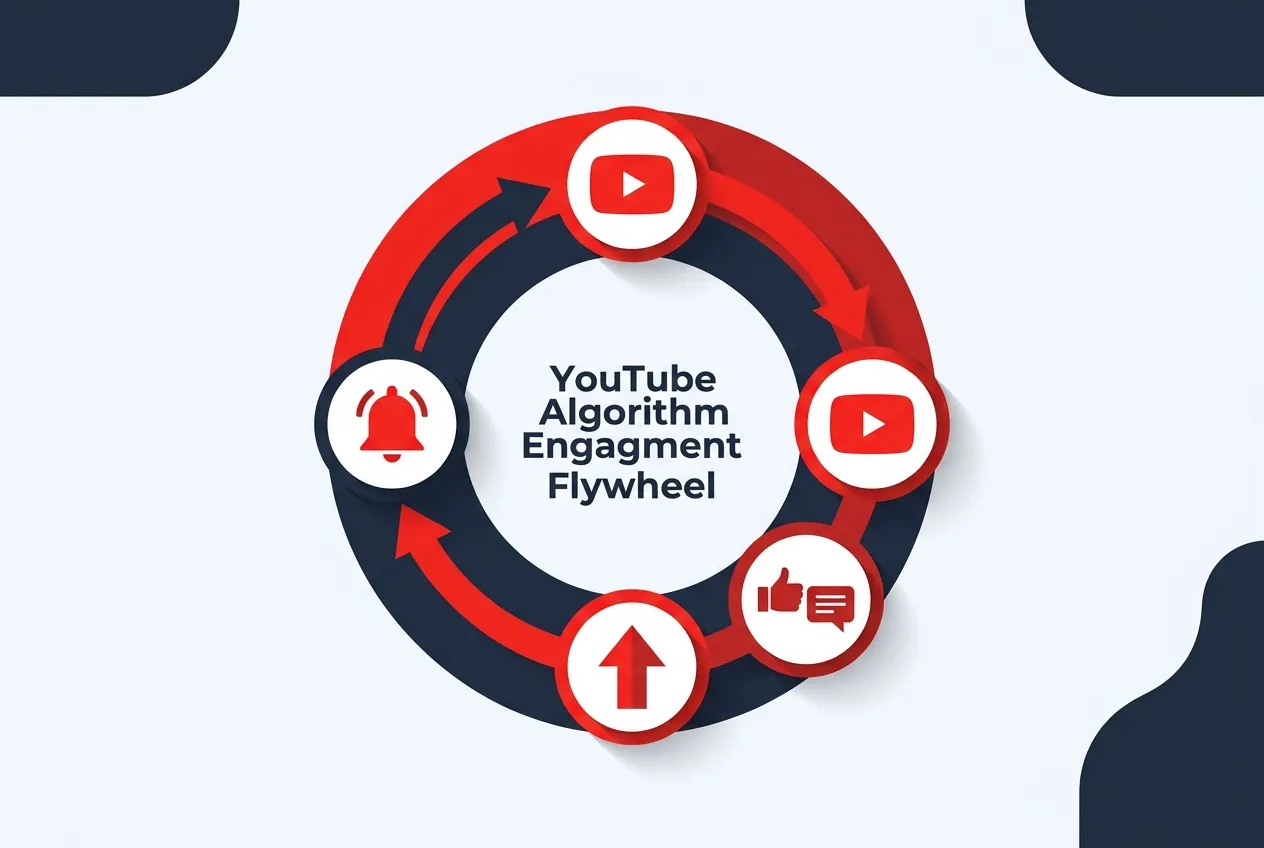
This creates what growth strategists call the engagement flywheel. More subscribers produce more initial views per upload. More early views generate stronger watch-time signals. Stronger signals cause YouTube to recommend the video to a wider audience. That wider audience produces organic subscribers, which increases the initial views on the next upload — and the cycle accelerates with each publishing cycle.
The Flywheel Effect: A channel with 1,000 subscribers that uploads consistently can expect 3 to 5 times more algorithmic reach than the same channel with 100 subscribers. The subscriber base acts as a launchpad for every piece of content you publish. Pairing subscriber growth with strategies to get more YouTube subscribers organically compounds this effect further.
With 500+ hours of video uploaded every minute, YouTube's discovery system must be ruthlessly selective about what it promotes. Channels that demonstrate consistent audience interest — measured partly through subscriber count and subscriber engagement — earn preferential placement in suggested video feeds, search results, and homepage recommendations. Even a purchased subscriber foundation, when paired with genuine content, tells the algorithm that real people have chosen to follow your channel. Each organic subscriber you gain afterward reinforces that signal.
The practical takeaway: when you buy 1000 YouTube subscribers, you shift your starting position in the algorithm's recommendation cycle. Investing in YouTube likes alongside subscribers further strengthens early engagement signals, giving every future upload a measurably better chance of reaching viewers who would never have found your channel otherwise. The goal is to get more views on YouTube through algorithmic momentum, not just a higher number on your profile.
How Does Buying YouTube Subscribers Actually Work?
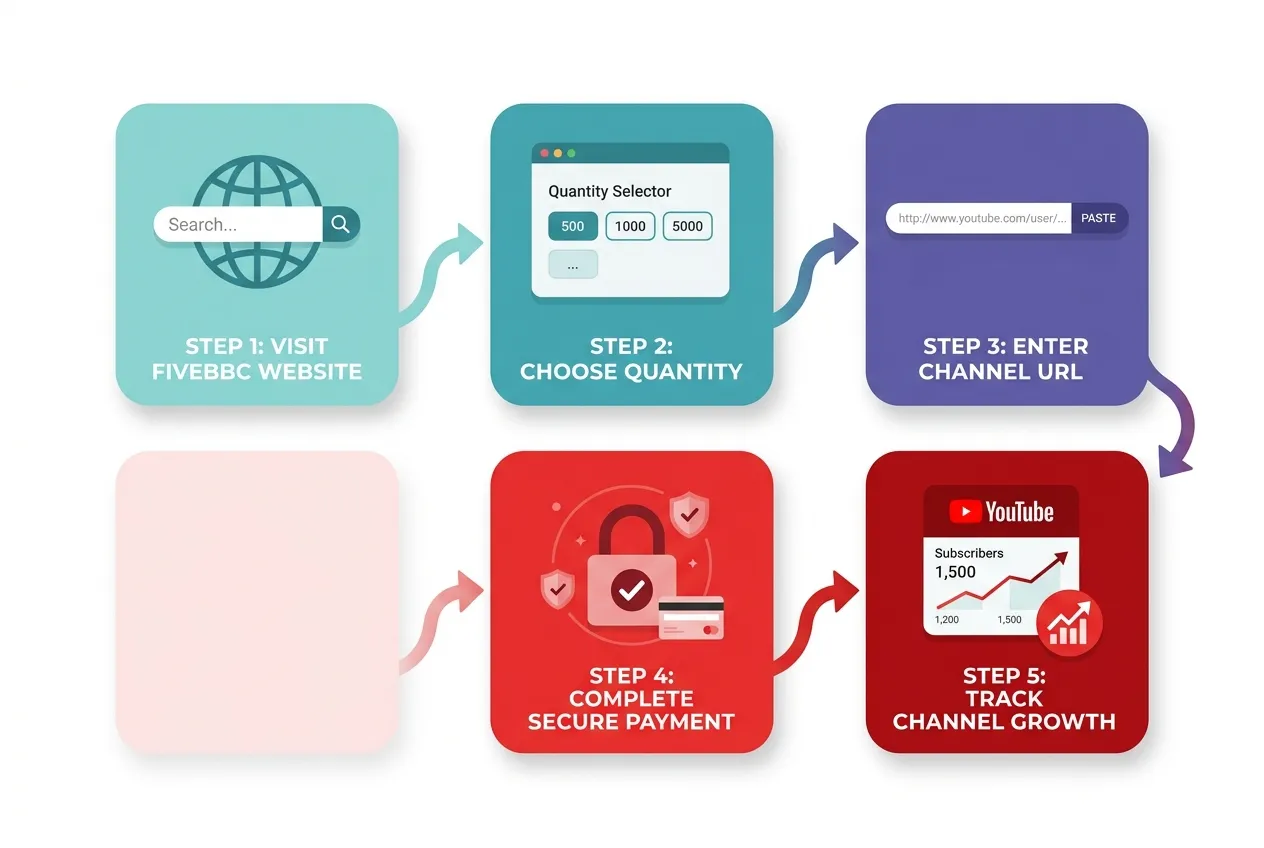
The process to buy 1000 YouTube subscribers takes under five minutes and requires zero technical knowledge. You never share your password, install software, or grant account access. Here is the step-by-step ordering process through FiveBBC:
- Visit the YouTube subscribers page — navigate to the FiveBBC subscriber service page and browse available packages
- Choose your quantity — select how many subscribers you need. Pricing is per 1,000, and you can order any amount within the package range (minimum 50 for the entry tier)
- Enter your channel URL — paste your public YouTube channel link. No login credentials are ever requested
- Complete secure payment — check out through encrypted processing. Multiple payment methods are accepted
- Subscribers start arriving — delivery begins within 1 to 3 hours of confirmed payment and continues through drip-feed distribution over the following days
The drip-feed approach is what separates legitimate services from bot operations. Rather than dumping 1,000 subscribers onto your channel in a single burst, delivery is spread across hours or days to mirror the pattern of natural channel growth. Your YouTube Studio analytics will show a steady upward trend instead of an obvious spike.
Delivery Timeline: FiveBBC's fastest package begins delivery within 0-3 hours of payment. For the entry-level tier, most orders complete within 1-2 days. Larger orders on higher-tier packages (24-48 hour delivery window) may take 3-5 days for full completion — this extended timeline actually benefits your channel by keeping the growth curve natural.
After step four, the process is entirely hands-off. There is nothing to approve, no verification emails to respond to, and no channel settings to adjust. The only visible change is your subscriber count climbing steadily in YouTube Studio. If any subscribers drop within the 30-day refill window, replacements are delivered automatically at no extra cost — a safety net that content creators consistently cite as the most important feature when choosing a provider.
Can Buying Subscribers Help You Reach Monetization Faster?
When creators buy 1000 YouTube subscribers, they directly address the harder half of the monetization equation. The YPP review process typically takes 2 to 4 weeks after meeting both thresholds — 1,000 subscribers and 4,000 watch hours. For most new channels, watch hours accumulate naturally with consistent uploads, but the subscriber count is where growth stalls.
According to TubeBuddy, channels need both 1,000 subscribers and 4,000 watch hours to qualify — and subscribers are consistently the harder threshold for new creators to reach. Many channels accumulate sufficient watch hours months before they cross the 1,000-subscriber mark, leaving monetization locked despite having an engaged viewing audience.
This is where purchasing subscribers creates a measurable shortcut. With the subscriber threshold met, your only remaining task is watch-hour accumulation — something that actually accelerates with a higher subscriber count, since more subscribers mean more notification-driven views on each upload. The two requirements feed each other, but only once you have enough subscribers to trigger the cycle.
The ROI math is straightforward. At $22.20 for 1,000 subscribers, you remove the bottleneck that keeps most small channels locked out of revenue for their entire first year. Even modest ad revenue — $1 to $3 per 1,000 views — begins paying back that investment within the first month of monetization for channels uploading weekly. As one common sentiment on social media puts it, creators want to "reach monetization requirements" and "get monetized on YouTube fast" — and eliminating the subscriber barrier is the most direct path.
Ready to reach 1,000 subscribers? FiveBBC delivers real YouTube subscribers starting at $22.20 per 1,000 — gradual delivery, 30-day refill guarantee, no password needed. Start your order now.
How Much Does It Cost to Buy 1000 YouTube Subscribers?
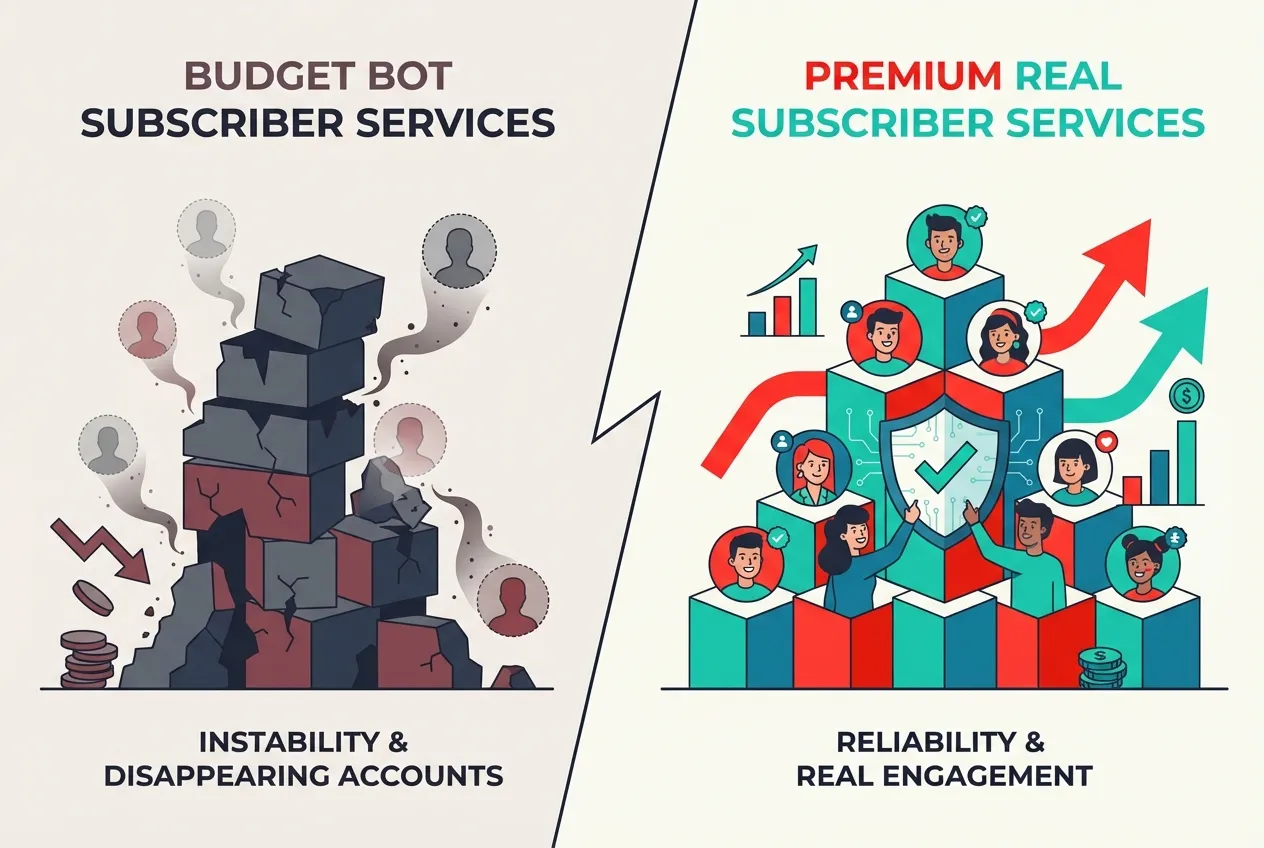
Real YouTube subscribers cost between $22 and $42 per thousand, depending on delivery speed and maximum channel size. The "$5 for 1,000 subscribers" price point that dominates search results typically signals bot accounts with no refill guarantee — accounts that disappear within the first week.
Here is what FiveBBC charges for verified, real-account subscriber packages in 2026:
| Package | Price per 1,000 | Min. Order | Delivery Speed | Refill |
|---|---|---|---|---|
| YouTube Subscribers [Max 5K] | $22.20 | 50 | 0-3 hours | 30 days |
| YouTube Subscribers [Max 10K] | $38.85 | 100 | 24-48 hours | 30 days |
| YouTube Subscribers [Max 50K] | $42.00 | 100 | 24-48 hours | 30 days |
The tier differences reflect channel size limits and delivery windows. The $22.20 package works for channels under 5,000 total subscribers and delivers within hours. Larger channels that need subscribers delivered to accounts with up to 50,000 existing subscribers pay $42 per thousand — still well below what most competitors charge for comparable quality.
According to Influencer Marketing Hub's 2026 pricing analysis, industry pricing for 1,000 YouTube subscribers generally falls between $35 and $55 across reputable providers. When you buy 1000 YouTube subscribers below $10, you almost always receive bot-generated accounts. The price gap exists because real-account subscribers require an actual network of active users, while bots can be generated at near-zero cost.
Pro Tip: If your channel has fewer than 5,000 subscribers, the entry-level $22.20 package delivers the best value. You can buy YouTube subscribers at this rate and upgrade to higher-tier packages as your channel grows past the 5K mark.
When comparing prices, factor in the refill guarantee. A $15 service with no refill that loses 40% of subscribers within a month effectively costs $25 per 1,000 retained subscribers — more than FiveBBC's base rate with full refill protection included.
Real vs Fake YouTube Subscribers: What Happens to Your Channel?
The difference between real and fake YouTube subscribers determines whether your investment builds your channel or damages it. According to YouTube's Community Guidelines, the platform regularly purges bot accounts in bulk sweeps — channels relying on fake subscribers can lose thousands overnight and face algorithmic penalties that suppress future content reach. Choosing where to buy 1000 YouTube subscribers matters more than how much you pay.
Here is how real and fake subscriber services compare across every metric that matters:
| Factor | Real Subscribers | Fake/Bot Subscribers |
|---|---|---|
| Account type | Active profiles with watch history | Auto-generated bots, no activity |
| Delivery method | Gradual drip-feed over days | Instant bulk dump |
| Engagement contribution | Indirect — social proof attracts organic viewers | Zero — bots never watch or interact |
| Retention rate | High with refill guarantee | 40-80% drop within first month |
| Detection risk | Minimal — matches organic patterns | High — triggers YouTube's bot detection |
| Refill guarantee | Standard with reputable providers | Rarely offered |
| Price range (per 1,000) | $20-$55 | $3-$10 |
The engagement rate gap reveals the real cost of bot subscribers. A channel with 1,000 real subscribers might see 50 to 100 views on a new upload from subscriber notifications alone — views that signal relevance to YouTube's recommendation engine. A channel with 1,000 bot subscribers sees zero notification-driven views because bots never open YouTube. The algorithm detects this mismatch between subscriber count and engagement, and it directly suppresses how often the platform recommends your videos to new viewers.
Warning: Reddit's r/Kyle_Appleford documented a channel that gained 900 subscribers in four hours overnight. The community immediately suspected bought bots and reported the channel. YouTube investigated and removed the bot accounts. The channel lost all gained subscribers and received a Community Guidelines warning. This is what happens when "cheap" means "bots."
The subscriber-to-view ratio is the metric that separates real growth from artificial inflation. YouTube expects channels to show a reasonable relationship between subscriber count and per-video views. When that ratio is wildly skewed — 5,000 subscribers but 12 views per video — the algorithm treats the channel as low-quality and limits its recommendation reach. Real subscribers, even purchased ones, contribute to a natural-looking ratio because they come from active accounts that generate occasional organic impressions.
Price alone is not a reliable quality indicator, but extreme discounts should raise suspicion. If a service charges $3 for 1,000 subscribers and cannot explain where those accounts come from, the answer is almost certainly automated bots. Legitimate providers invest in maintaining networks of real user accounts, which carries inherent costs that keep pricing above the bot-service floor.
What Is the ROI of Buying Subscribers vs Organic Growth?
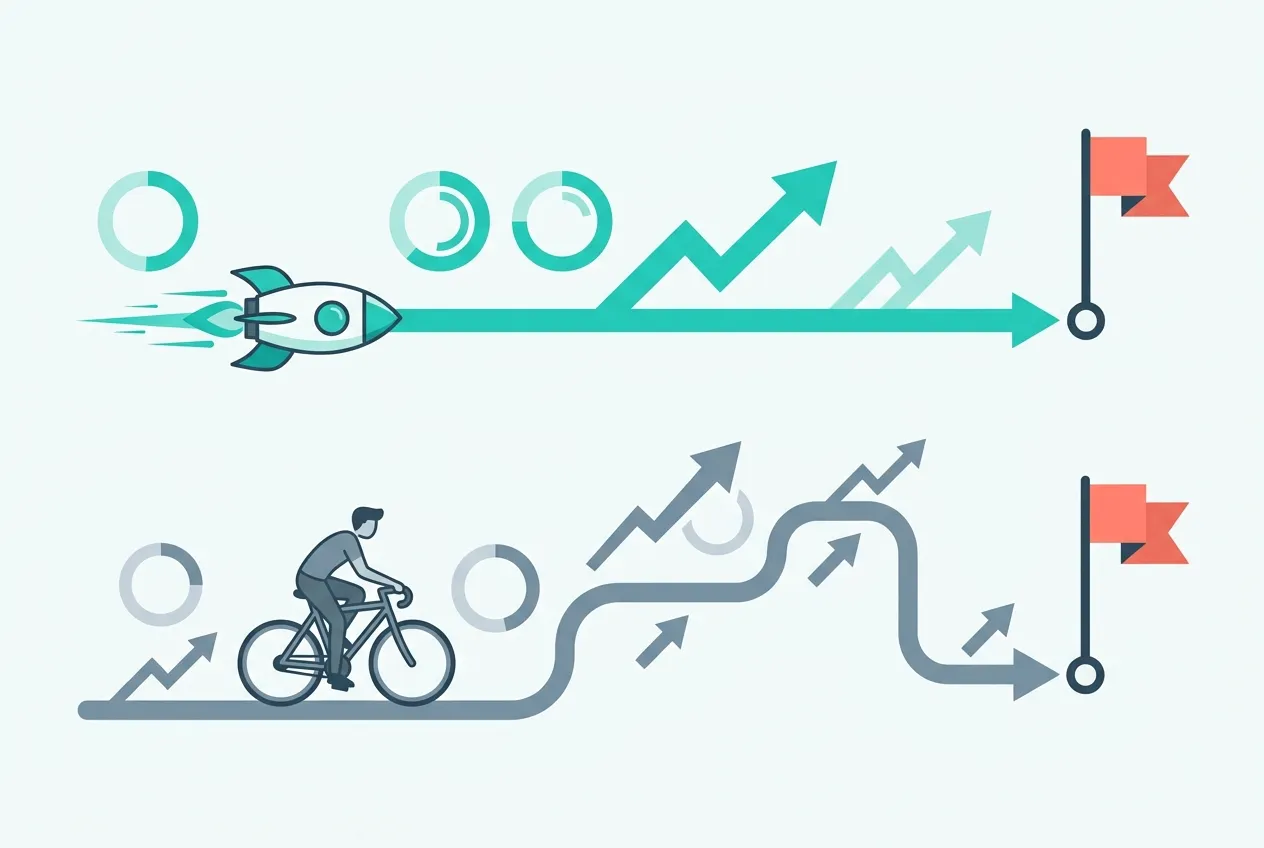
Organic growth to 1,000 subscribers takes most channels 12 to 18 months of consistent weekly uploads — and many channels never reach that threshold at all. When you buy 1000 YouTube subscribers, that timeline compresses to days for a fixed cost, letting you start earning monetization revenue months earlier than the organic-only path.
Here is how the two approaches compare side by side:
| Factor | Buying Subscribers | Organic Growth |
|---|---|---|
| Time to 1,000 subs | 1-5 days | 12-18 months |
| Direct cost | $22.20 (entry tier) | $0 (but time cost is real) |
| Equipment/production cost | None | Camera, mic, editing software |
| Effort required | 5 minutes | Hundreds of hours of content |
| Engagement quality | Social proof, limited direct engagement | High — genuine audience |
| Monetization unlock | Immediate (subscriber requirement met) | 12-18 months average |
| Long-term retention | Refill-guaranteed for 30 days | High natural retention |
The real ROI calculation is not "buying vs organic" — it is "buying + organic vs organic alone." Creators who combine a purchased subscriber base with consistent weekly uploads reach full YPP monetization significantly faster than those relying on organic growth alone. The purchased base handles the subscriber threshold while organic efforts accumulate the required 4,000 watch hours.
According to Statista, YouTube has over 2.5 billion monthly active users — meaning the audience is there, but discovery is the bottleneck. A channel with 1,000 subscribers gets meaningfully better algorithmic treatment than one with 47, which translates to more impressions, more suggested video placements, and faster watch-hour accumulation.
In our experience working with 50,000+ customers since 2013, creators who combine a purchased subscriber base with consistent weekly uploads reach full YPP monetization 3-4x faster than those relying on organic growth alone. The $22.20 investment pays for itself within the first month of ad revenue for most channels that meet the watch-hour requirement.
Key Insight: Think of purchased subscribers as removing the harder half of the monetization equation. Watch hours require ongoing content — there is no shortcut for that. But the subscriber threshold can be crossed in days, letting you run both growth tracks in parallel. Look for video ideas that drive organic views to accelerate your watch-hour accumulation while your subscriber base is already in place.
Is It Safe to Buy YouTube Subscribers in 2026?
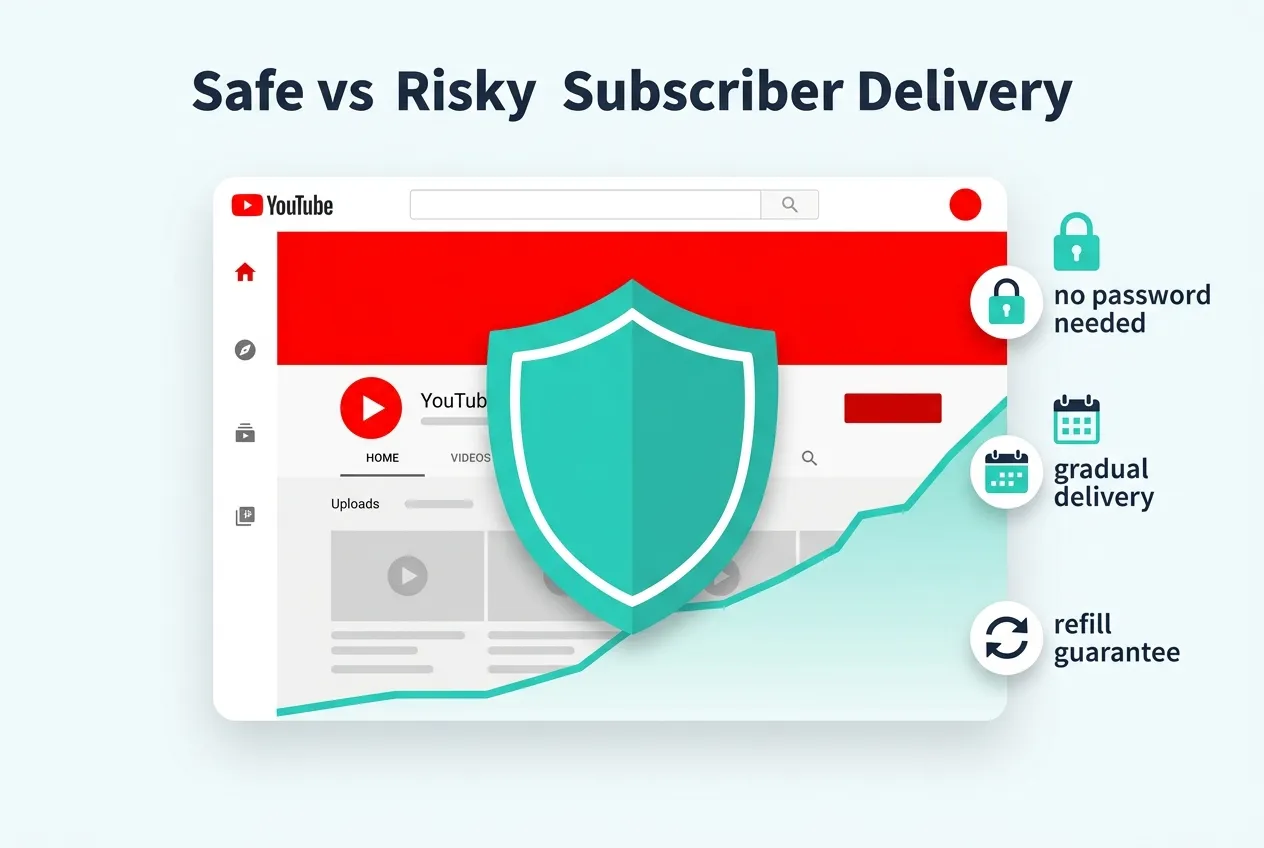
The decision to buy 1000 YouTube subscribers is safe when the provider delivers real accounts through gradual, drip-feed distribution. The risk comes from bot services, not from the act of gaining subscribers itself. According to YouTube's Community Guidelines, the platform prohibits "fake engagement" generated through automated means — bots, scripts, and click farms. The policy targets the mechanism of manipulation, not the subscriber count.
Understanding what YouTube actually detects makes the safety picture clearer. YouTube's bot detection systems flag three patterns: accounts with zero watch history subscribing in bulk, sudden spikes of thousands of subscribers within minutes, and engagement ratios that make no mathematical sense (10,000 subscribers but 3 views per video). Gradual delivery from active accounts avoids all three triggers because each subscription looks like a normal user action within an active browsing session.
Warning: Services that promise "instant delivery of 10,000 subscribers" are almost certainly using bots. Instant mass delivery creates exactly the spike pattern YouTube's detection systems are built to catch. If a provider cannot explain their delivery method, treat that as a red flag.
Before choosing any provider, verify these quality indicators:
- Real accounts with profile pictures and watch history
- Gradual drip-feed delivery over hours or days
- No password or login credentials required
- 30-day refill guarantee for any drops
- Responsive customer support
- Transparent pricing with no hidden upsells
Can you get banned for buying YouTube subscribers from a legitimate service? The practical risk is negligible. YouTube penalizes bot activity, not popularity. Thousands of creators use growth services without any account issues because the subscribers they receive behave like normal users across every metric YouTube monitors — session duration, subscription patterns, and activity profiles.
The creators who run into trouble are the ones who chase the cheapest possible price without questioning where those subscribers come from. A Reddit thread on r/Kyle_Appleford documented a channel gaining 900 subscribers in four hours overnight, which the community immediately flagged and reported. That kind of unnatural spike is what draws scrutiny — not a steady drip of 50 to 100 subscribers per day over two weeks.
Why Do You Need 1,000 YouTube Subscribers?

The 1,000-subscriber mark is not an arbitrary number — it is the gatekeeper to YouTube monetization. Without it, your channel cannot earn a single dollar from ad revenue, regardless of how many views your videos generate. According to YouTube Support, the YouTube Partner Program requires 1,000 subscribers plus 4,000 watch hours (or 10 million Shorts views) before you can apply for monetization.
YouTube actually offers two monetization tiers, and both hinge on subscriber count:
| Milestone | Subscribers Required | Additional Requirement | What You Unlock |
|---|---|---|---|
| YPP Basic | 500 | 3,000 watch hours or 3M Shorts views | Super Chat, Super Thanks, channel memberships |
| YPP Full | 1,000 | 4,000 watch hours or 10M Shorts views | Ad revenue sharing, YouTube Premium revenue |
| Silver Play Button | 100,000 | — | YouTube creator award, brand recognition |
The 500-subscriber tier unlocks features like Super Chat and memberships, but full ad monetization — the revenue stream most creators are chasing — requires that 1,000-subscriber threshold. For most new channels, subscribers are the harder half of the equation. Watch hours accumulate naturally with consistent uploads, but subscriber growth stalls when your channel lacks the social proof to convince new visitors to hit that subscribe button.
Key Insight: Channels with fewer than 1,000 subscribers face a compounding disadvantage. Without monetization income, many creators cannot justify the time investment, leading to abandoned channels before they ever reach profitability. Crossing the 1,000-subscriber threshold early — whether through purchasing or organic methods — breaks this cycle and keeps creators producing content.
This is why the 1,000-subscriber milestone drives so much search volume. As one Instagram creator put it: "1000 subscribers. It might not sound like much in a world of millions and viral numbers. But for me, it means something very real." That emotional weight, combined with the financial unlock of YouTube views turning into actual revenue, makes the first thousand the most strategically important subscribers your channel will ever gain.